How to Study with Manana Japanese
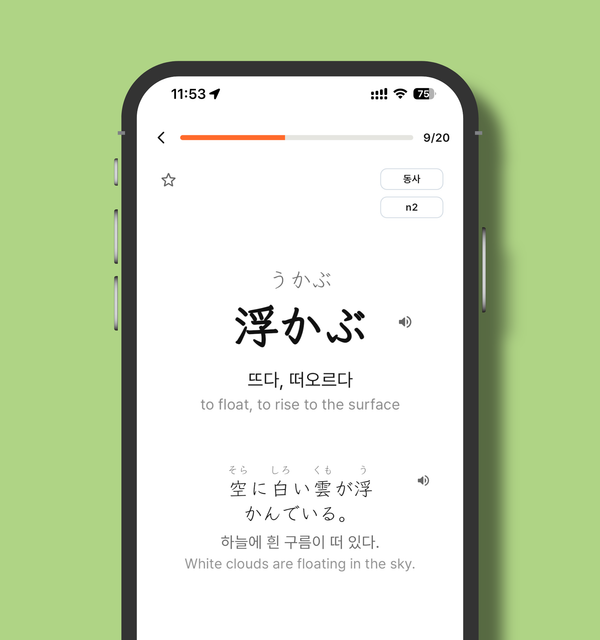
Not sure where to start with Manana Japanese? This guide shows a simple study routine: choose a goal, study vocabulary, kanji, and grammar cards, then use FSRS reviews to keep them fresh.
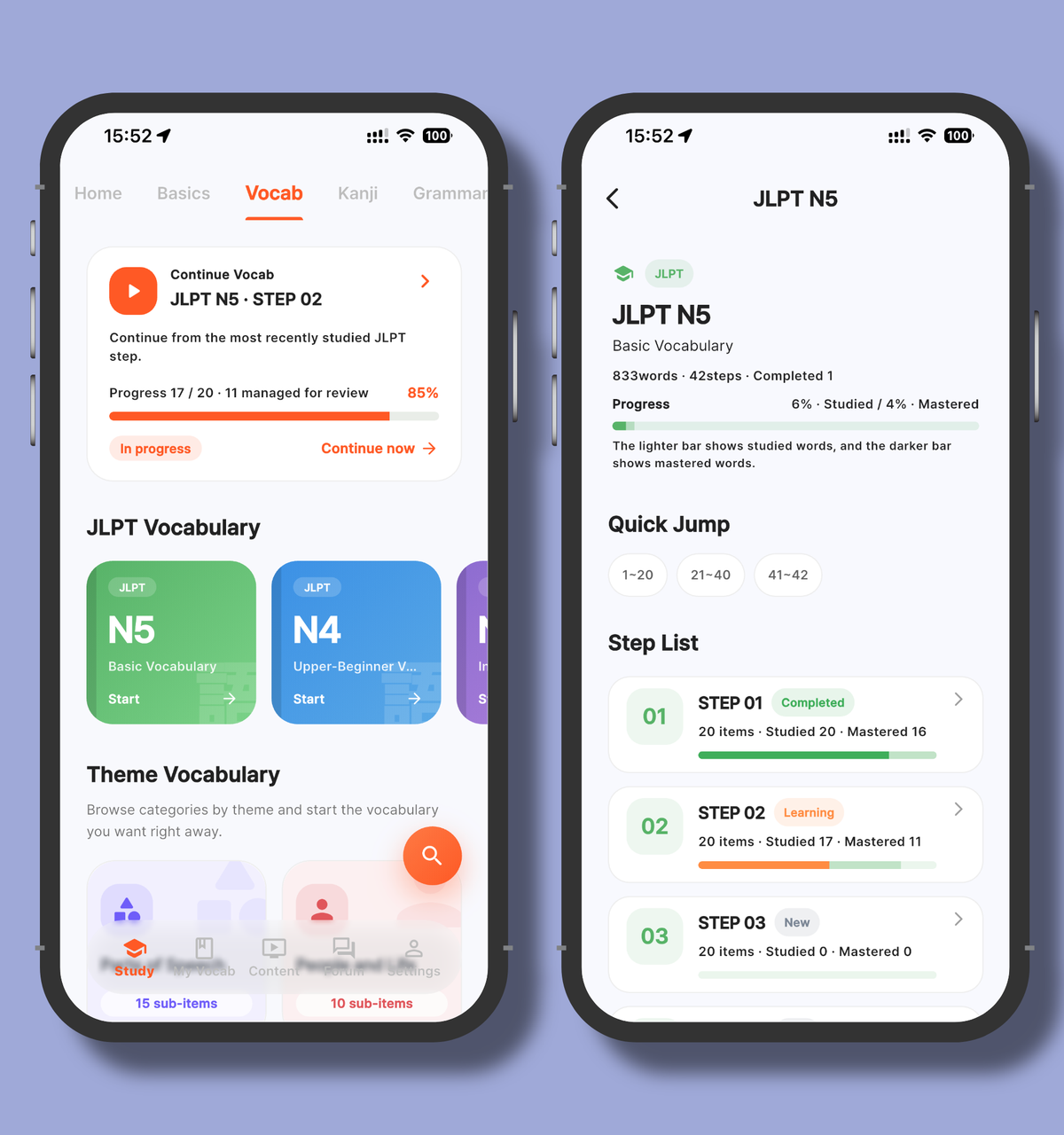
When you first open Manana Japanese, it may look like there are a lot of tabs and features.
There is vocabulary, kanji, grammar, and even FSRS reviews, so it can be hard to know where to start.
But you do not need to understand every feature from the beginning.
Choose vocabulary from the Study tab,
work through the steps, and when your review queue builds up,
run FSRS reviews.
At first, that is enough.
If You Are Preparing for the JLPT
If you have a target level, the starting point is simple.
Study vocabulary, kanji, and grammar from the same level together.
For example, if you are preparing for N5, start by selecting JLPT N5 in the Vocabulary tab and work through a few steps each day.
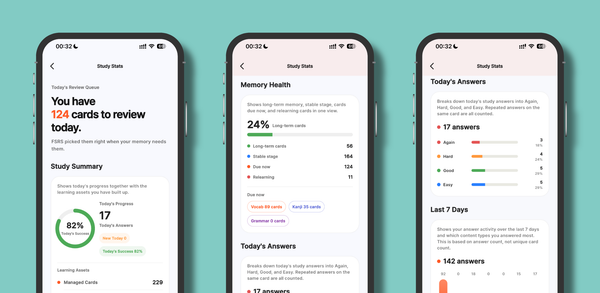
Once your review queue has built up a bit, run an FSRS review.
There is no exact number of cards you need before starting. At first, just try running reviews when you have a small number of cards, then gradually find a pattern that fits your pace.
Next, continue with JLPT N5 in the Kanji and Grammar tabs as well.
Kanji connects a word’s meaning with its structure, while grammar shows how the words you have learned are used in sentences.
When vocabulary, kanji, and grammar cards build up in your review queue, run FSRS again.
Cards you do not remember well will come back sooner, and cards that feel familiar will appear later. You do not need to force a fixed number of repetitions. Manana chooses the cards that are worth reviewing now.
If You Want to Get Used to Japanese Itself
If your goal is not a test right away, you can start more lightly.
For vocabulary, I recommend starting with JLPT N5. It contains many basic words used in everyday life, so it is a good place to build your foundation.
You do not have to start kanji with JLPT kanji.
At first, Elementary School Kanji may feel easier. These are characters learned by Japanese elementary school students, so you will often see familiar characters from anime, YouTube subtitles, signs, and menus.
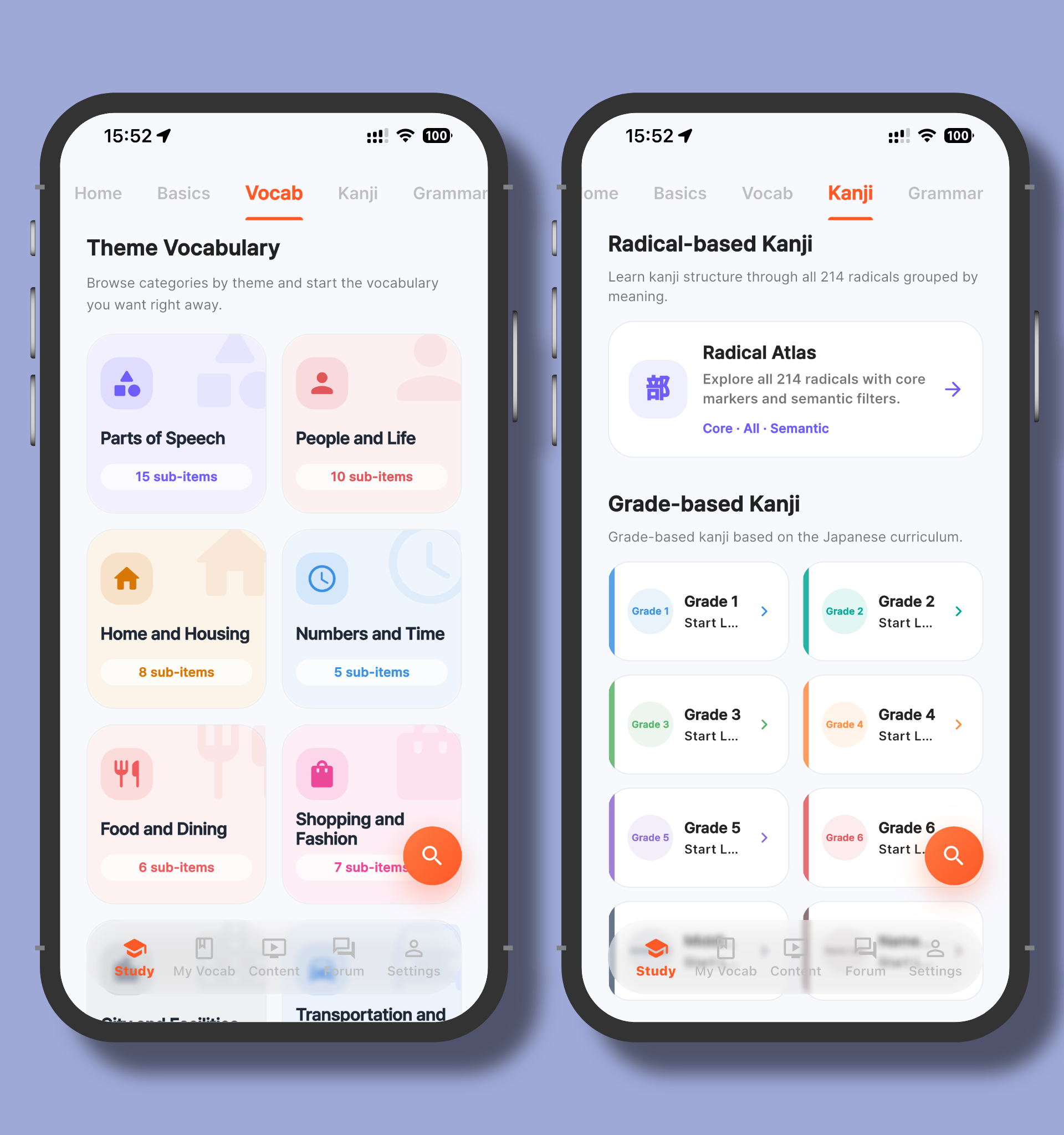
Starting with familiar characters makes kanji feel much less intimidating.
Kanji is less like a separate subject you have to memorize in isolation, and more like a set of clues that help you read Japanese sentences.
For grammar, you can start with N5 Grammar.
Once basic grammar begins to settle in, sentences start to become much easier to read than when you study vocabulary alone.
Use Details When Something Feels Unclear
If a flashcard comes to mind right away, you can simply move on.
Instead, when a word keeps making you pause, open the detail view.
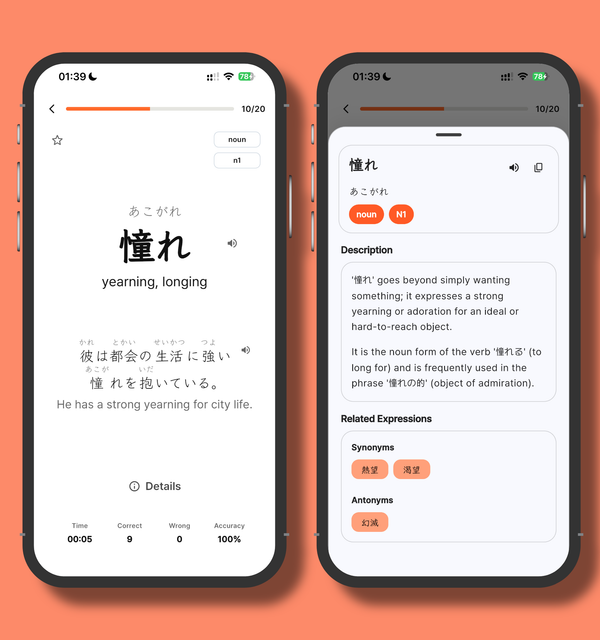
In the word detail view, you can check example sentences, TTS, synonyms, and antonyms. For verbs and adjectives, you can also see conjugation forms.
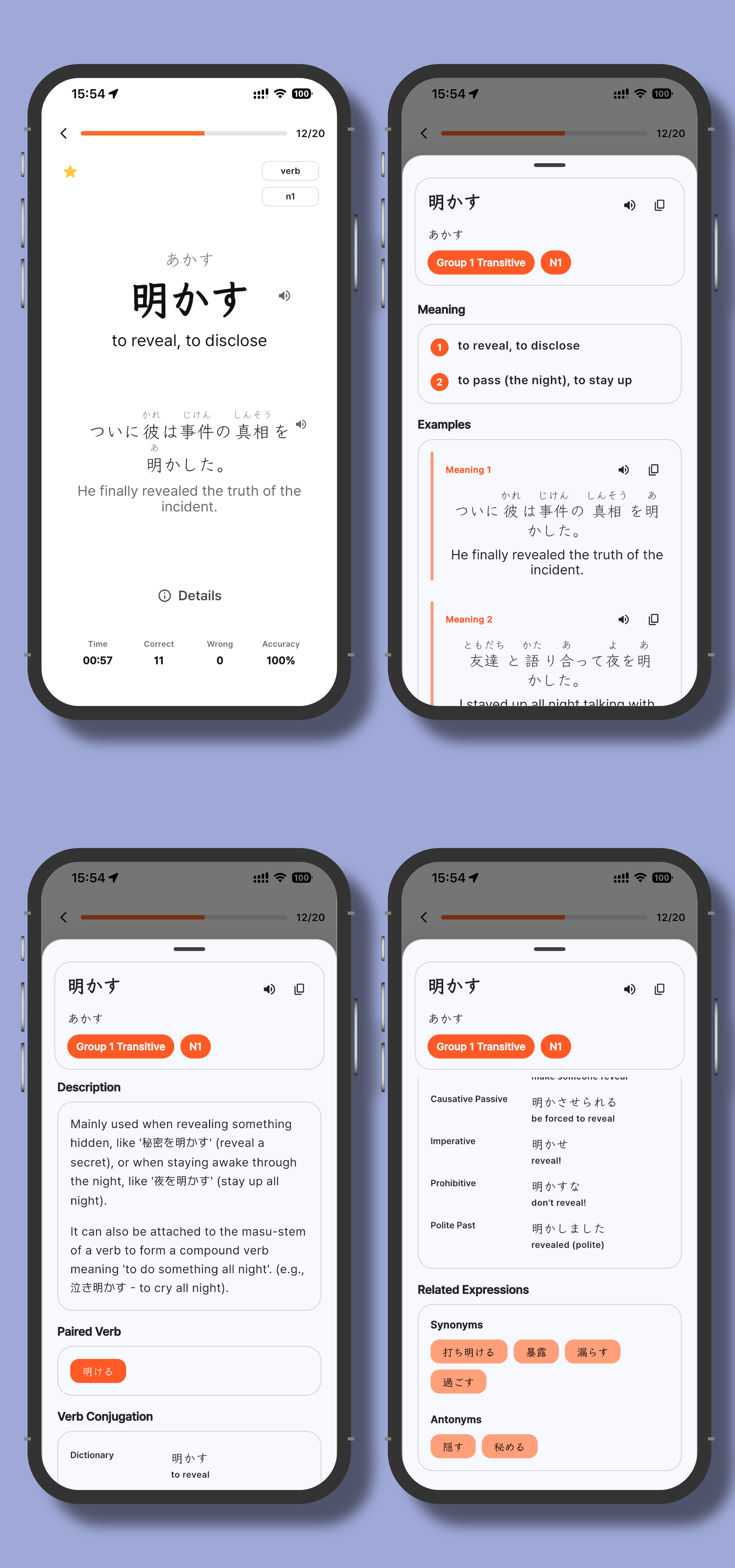
A word memorized by itself fades quickly.
But when you see it in a sentence, hear it out loud, and compare it with similar words, you gain more clues that help it stay in memory.
When kanji feels confusing, open the kanji detail view.
You can check stroke order animation, the origin and nuance of the character, and story-based memory hints.
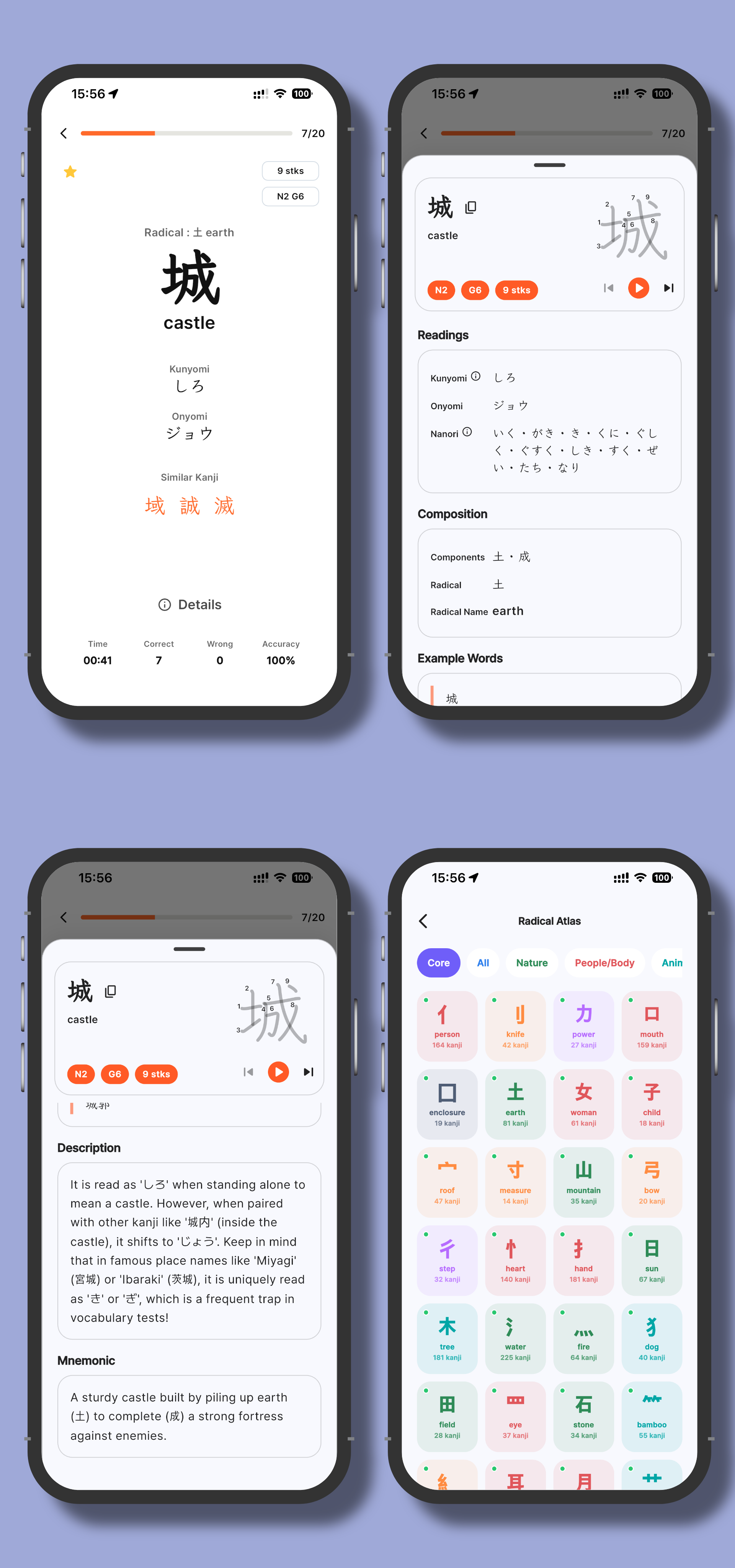
Once you understand a kanji properly, there will be moments when you can guess the meaning of a word you have never seen before. As those moments build up, reading becomes a little easier.
In the grammar detail view, you can check example sentences, connection forms, nuance, and grammar explanations.
You can also compare similar-looking expressions, which helps you feel less uncertain when reading sentences.
Your Daily Routine Can Be Short
You do not need a grand study plan.
If there are cards in your review queue, run FSRS first.
Then work through a few vocabulary steps.
If you have time, study kanji or grammar together.
Open the detail view only for things that feel unclear.
That is enough.
What matters is not doing a lot at once, but studying a little consistently every day.
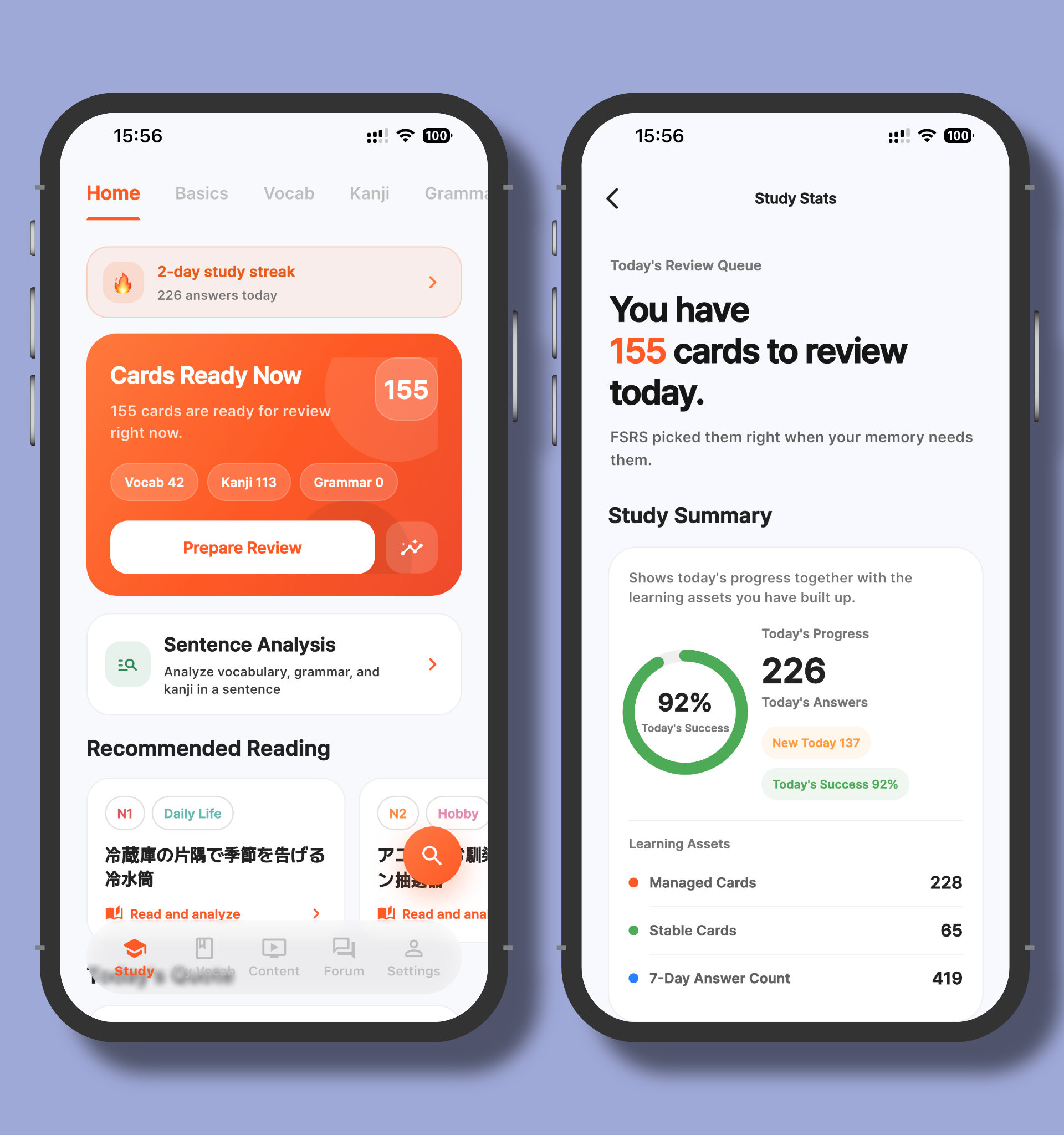
What Matters Is the Study Flow
You do not need to master every feature in Manana Japanese from the beginning.
Set a goal, study the cards that match that goal,
and when your review queue builds up, run FSRS reviews.
Just repeat this flow.
In the end, Japanese study is about how consistently you can keep this process going.
You do not have to use every feature from day one.
Choose one goal you need right now, and start with the cards that match that goal.